

How Go-to-Market Strategy Drives EBITDA
 Dan Fisher: Aug 19, 2026, 8:45:46 AM
Why Your Sales Problem Is Actually a Valuation Problem: How Go-to-Market Strategy Drives EBITDA
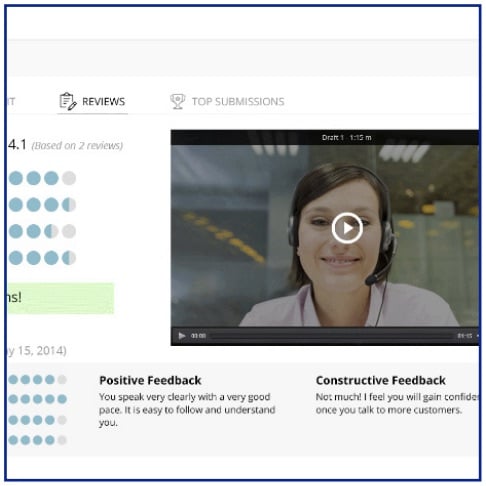
Yesterday, I hosted a live sales training call with a client’s sales team.
No hypotheticals. No fake scenarios.
Each rep brought a real prospect, a real call plan, and role played live while I played the buyer.
And to their credit—they showed up. That alone takes guts.
But what happened next is the part that matters.
The role plays were polite.
Encouraging.
Supportive.
Everyone gave feedback.
Everyone said, “Nice job.”
Everyone acknowledged how hard cold calling is.
And yet… very little changed.
When I went back and listened to the calls, something subtle—but important—stood out:
Reps stayed safe
Feedback stayed soft
Criticism was carefully wrapped
Nobody wanted to be too direct
Why?
Because this was happening in front of peers.
Because managers don’t want to embarrass anyone (and often confuse being liked with being respected)
Because nobody wants to hurt feelings.
That’s human.
It’s understandable.
And it’s exactly why most role plays fail.
Sales is a pressure cooker—but practice usually isn’t.
Here’s the harder truth.
When I listened to the opening 30 seconds of each role play, it was easy to notice a consistent pattern:
Instead, reps opened with some variation of the following:
“I wanted to connect, introduce myself, and learn more about your business.”
Sounds reasonable. Polite. Professional.
It is how most in the industry (myself included) have been taught to sell.
But it’s not how buyers want to be engaged, which is why it is so ineffective.
When reps don’t do the work before the call, they’re forced to rely on:
And that’s exactly why conversations drift, stall, or get redirected to HR.
So yes — it looks like a conversation quality problem. And it is.
But the root cause issue is the lack of effort.
Inevitably, someone always says:
“If this were a real call, I would have prepared.”
I’ve heard that line hundreds of times.
The problem is, preparation isn’t situational—it’s behavioral.
How a rep prepares when the stakes are low is usually how they prepare when the stakes are high. People don’t suddenly become disciplined, hypothesis-driven, and buyer-centric just because the call is “real.”
They default to their habits.
Which means role play doesn’t just reveal conversation quality—it reveals how reps actually prepare.
The value of that call wasn’t in the role play itself—it was in what it exposed
And here’s the key insight: everyone in the room felt it, but nobody wanted to say it directly.
Why AI Role Play Changes This Dynamic
This is where contextualized AI role play becomes a game changer—especially for IT staffing and IT consulting teams.
AI doesn’t worry about hurting feelings, sounding too blunt, "being liked," or protecting egos.
It responds the way buyers do.
And when the rep shows up unprepared? The AI exposes it immediately.
And the feedback is clear.
Objective. Consistent. Not emotional. Not personal. Not awkward.
That’s not a knock on managers or peers—it’s an acknowledgment of reality.
Humans struggle to apply pressure and stay objective at the same time.
AI doesn’t.
What Changed for My Customers Using AI Role Play
When my IT staffing and consulting customers moved from live, peer-based role plays to contextual AI role plays, something important happened:
As a result:
The Real Job of Sales Role Play
Sales role play isn’t supposed to make people feel good.
It’s supposed to make people do the work.
That means:
Contextual AI role play breaks that pattern—not by replacing managers, but by enforcing standards consistently and unemotionally. Practice becomes safer because it’s more honest.
Menemsha Group is the creator of the Menemsha Sales Performance System™ (MSPS) — an operating system built exclusively for IT staffing firms. MSPS replaces the “Sales Superhero Model” — where revenue depends on one or two key performers — with a complete system that defines how a team sells, builds the skills to execute it, and creates the management infrastructure to make performance predictable and scalable. Founded by Dan Fisher in 2008, Menemsha Group has worked with over 500 IT staffing firms and trained thousands of sellers and recruiters with industry-specific content, methodology, and coaching.
Dan Fisher: Aug 19, 2026, 8:45:46 AM
Why Your Sales Problem Is Actually a Valuation Problem: How Go-to-Market Strategy Drives EBITDA
Dan Fisher: Aug 6, 2026, 9:19:49 AM
ere's a question worth sitting with: if you sold your IT staffing firm and walked away, would your top clients stay — or would they follow you out...