

How Go-to-Market Strategy Drives EBITDA
 Dan Fisher: Aug 19, 2026, 8:45:46 AM
Why Your Sales Problem Is Actually a Valuation Problem: How Go-to-Market Strategy Drives EBITDA

Effectively interviewing, screening, and placing full-stack software engineers requires a thorough understanding of the tools, programming languages, operating systems, web servers, database servers, and other technologies that work together to build digital products and solutions such as websites, web pages and mobile applications.
This includes understanding the differences between front-end and back-end software development, the role and value of software frameworks, the differences between the most.jpeg?width=450&height=253&name=MG%20Tech%20Stack%20House%20Infographic%20(1).jpeg) common tech stacks, LAMP, MEAN, MERN and MEVN and differentiating between the role and responsibilies of a front-end developer versus a back-end developer and full-stack developer.
common tech stacks, LAMP, MEAN, MERN and MEVN and differentiating between the role and responsibilies of a front-end developer versus a back-end developer and full-stack developer.
Our latest technology training for IT Recruiting Professionals, The Recruiter's Guide to Qualifying and Placing Full Stack Software Engineers, enables IT recruiters with the requisite competencies and tools to effectively source, screen, and qualify front-end, back-end, and full-stack software engineers.
We're enabling recruiters to demonstrate credibility more efficiently and effectively and create a valuable candidate and customer experience by enabling them with technical knowledge that is highly relevant and valuable to the candidates and customers they serve.
Participants who complete this program are enabled with the competencies to:
Click on the link to learn more about our technical recruiter training and certification programs.

Menemsha Group is the creator of the Menemsha Sales Performance System™ (MSPS) — an operating system built exclusively for IT staffing firms. MSPS replaces the “Sales Superhero Model” — where revenue depends on one or two key performers — with a complete system that defines how a team sells, builds the skills to execute it, and creates the management infrastructure to make performance predictable and scalable. Founded by Dan Fisher in 2008, Menemsha Group has worked with over 500 IT staffing firms and trained thousands of sellers and recruiters with industry-specific content, methodology, and coaching.
Dan Fisher: Aug 19, 2026, 8:45:46 AM
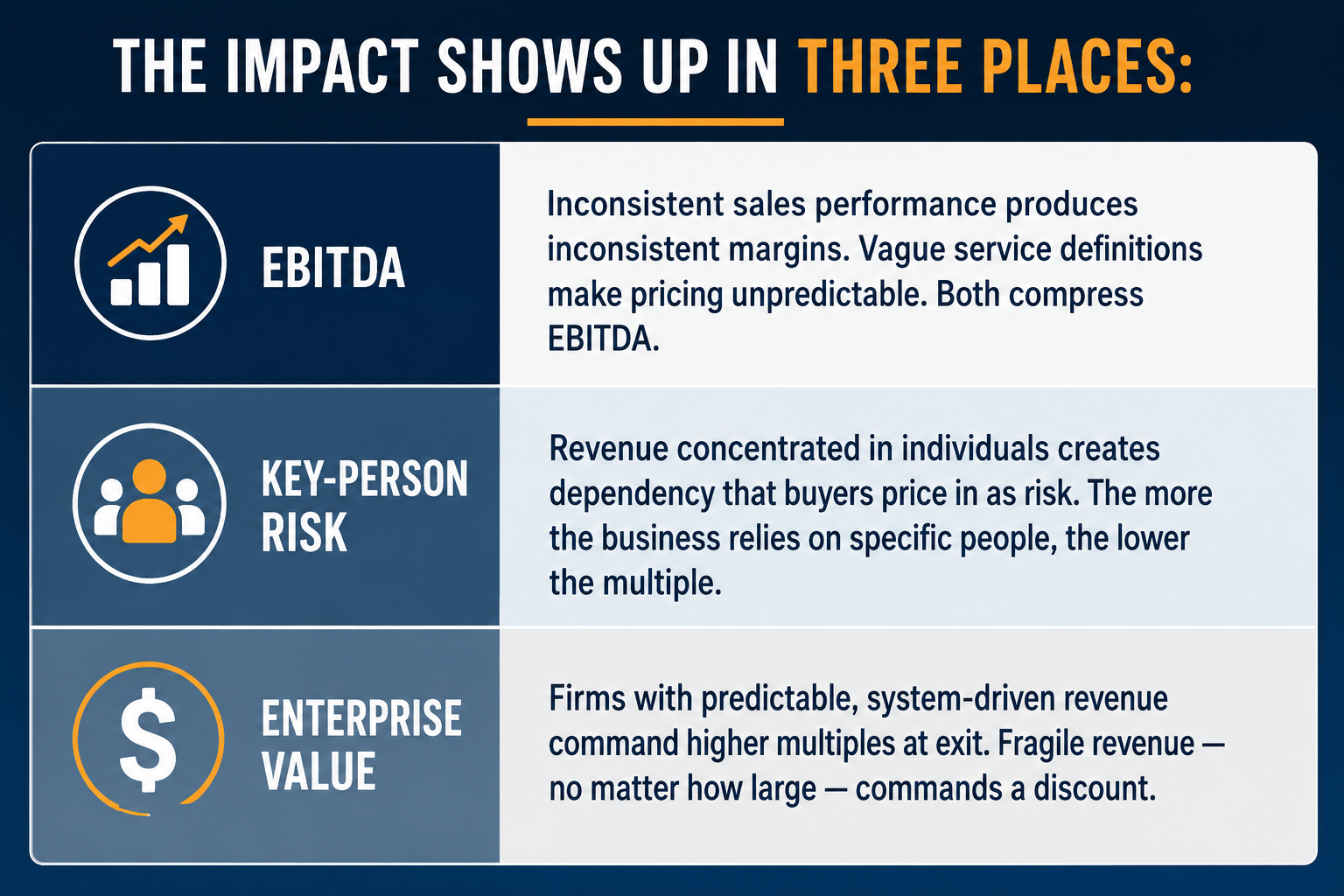
Why Your Sales Problem Is Actually a Valuation Problem: How Go-to-Market Strategy Drives EBITDA
Dan Fisher: Aug 6, 2026, 9:19:49 AM
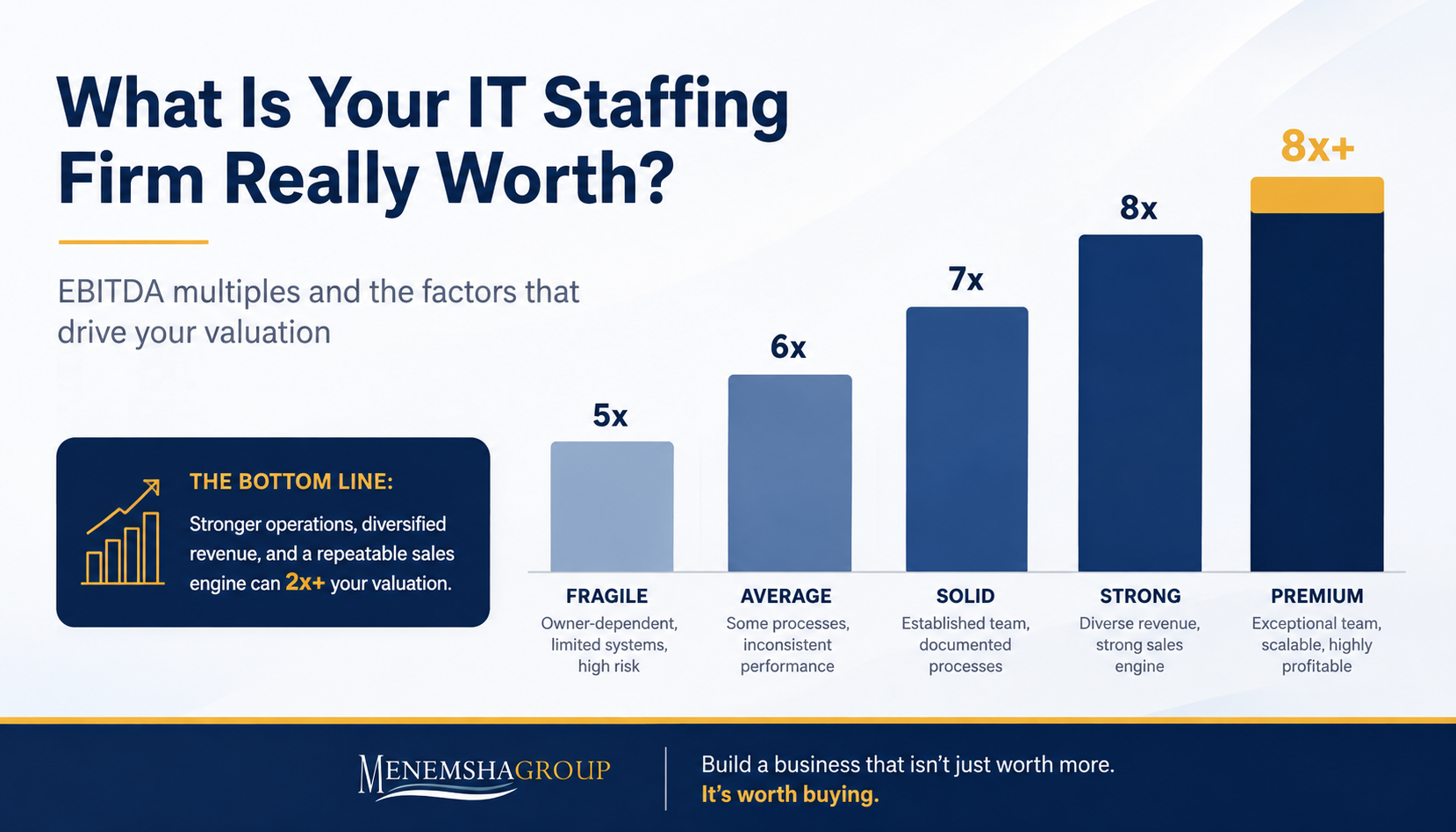
ere's a question worth sitting with: if you sold your IT staffing firm and walked away, would your top clients stay — or would they follow you out...