

How Go-to-Market Strategy Drives EBITDA
 Dan Fisher: Aug 19, 2026, 8:45:46 AM
Why Your Sales Problem Is Actually a Valuation Problem: How Go-to-Market Strategy Drives EBITDA

If you’re like most sales professionals, you’re probably exhausted from hearing some version of:
“We’re not hiring.”
“We don’t have a budget.”
It’s frustrating. But here’s the truth: if that’s what you’re hearing all the time, it’s likely because you’re asking the wrong questions. You need to change the conversation.
Let’s be honest. Too many sales reps in this industry sound like beggars:
When you lead with those questions, you’ve basically invited the objection. You’re signaling that your only value is filling an open req. If they don’t have one, the conversation is dead on arrival.
Great sellers ask different questions—questions that shift the focus from “open jobs” to “business priorities.” For example:
These kinds of questions uncover customer priorities including challenges that exist whether or not there's a budget pre-approved for hiring. And that’s where the real sales opportunities live.
Why You Should Lead With the Objection
Even with better questions, the “no budget, not hiring” objection is unavoidable in today’s market. And if you wait for the customer to bring it up, you’re stuck playing defense.
The smarter move? Bring it up yourself—right at the start.
Sales Rep: “John, can I assume your situation is similar to many of my other clients right now—not hiring and with little to no budget for additional resources in the near term?”
By putting it on the table first, you:
The Pivot: From “No Budget” to Priorities
Once they confirm, pivot immediately:
Sales Rep: “John, I completely understand—budgets are tight everywhere. What I’m hearing from other technology leaders is that, even with hiring frozen, their priorities still include aggressive project deadlines. And the struggle for most comes down to one of three things: no clear plan, not enough capacity, or gaps in critical talent. Which are you finding most challenging?”
This pivot moves the conversation from whether they’re hiring (they’re not) to how they’re executing on existing commitments (always relevant). The point is, you want to pivot the conversation to focus on their priorities.
Because here’s the reality:
Your Real Job in a Down Economy
In a strong market, customers already have budget-approved job orders—they hand them to you.
In a down economy, the priorities and challenges still exist. The difference is you have to uncover them and build the business case for why funding must be approved.
Your role is to:
That’s what it means to truly sell. Not wait for orders, but create them.
The Bottom Line
If you keep hearing “no budget, we’re not hiring,” stop and ask yourself: “What did I say or ask that led to that objection?”
Replace beggar’s questions with priority-focused ones. Lead with the objection instead of waiting for it. And use the conversation to uncover the challenges your customers can’t afford to ignore.
In a down economy, the salespeople who thrive aren’t the ones waiting for budget-approved job orders. They’re the ones who can uncover pain, frame its impact, and turn it into new business.

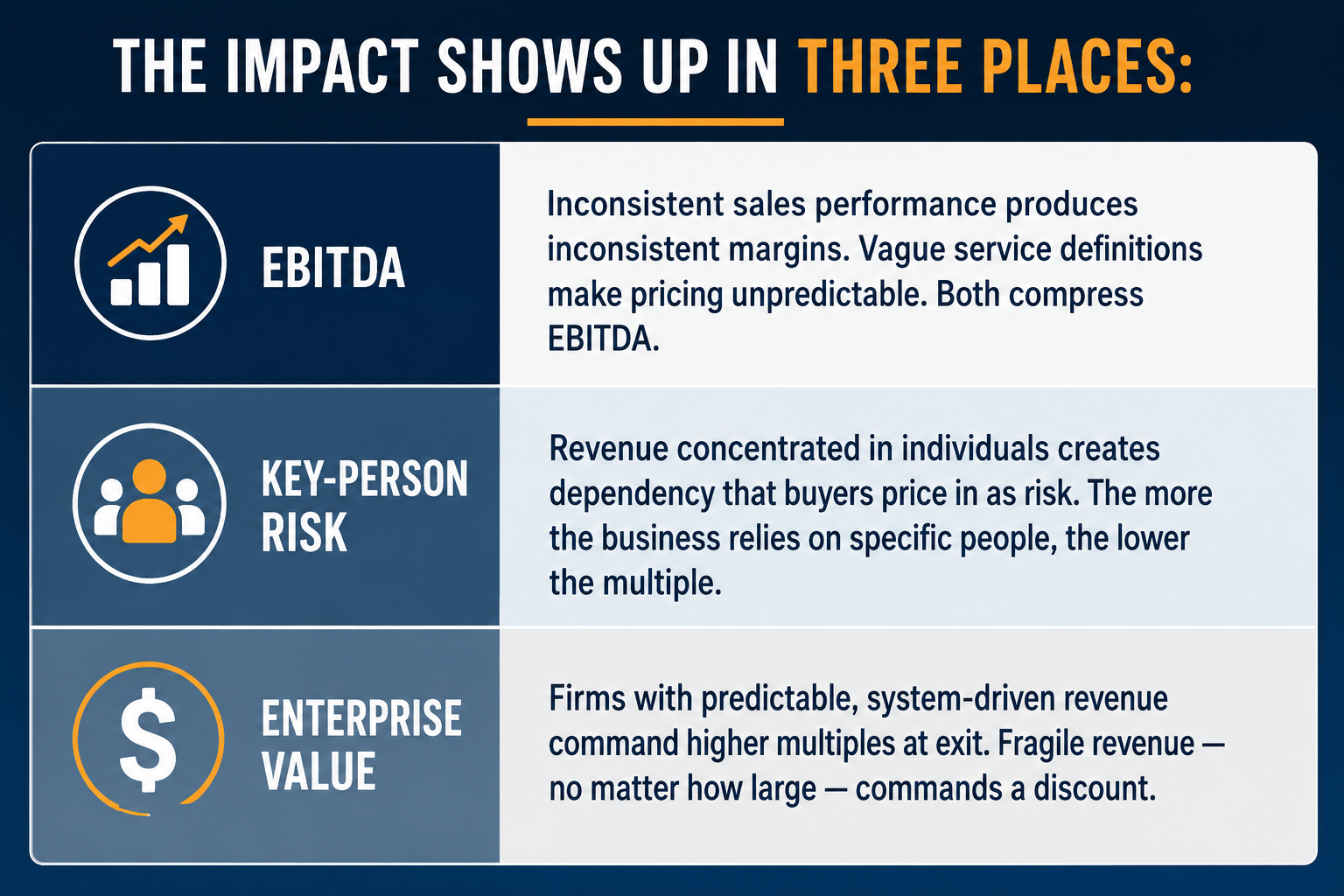
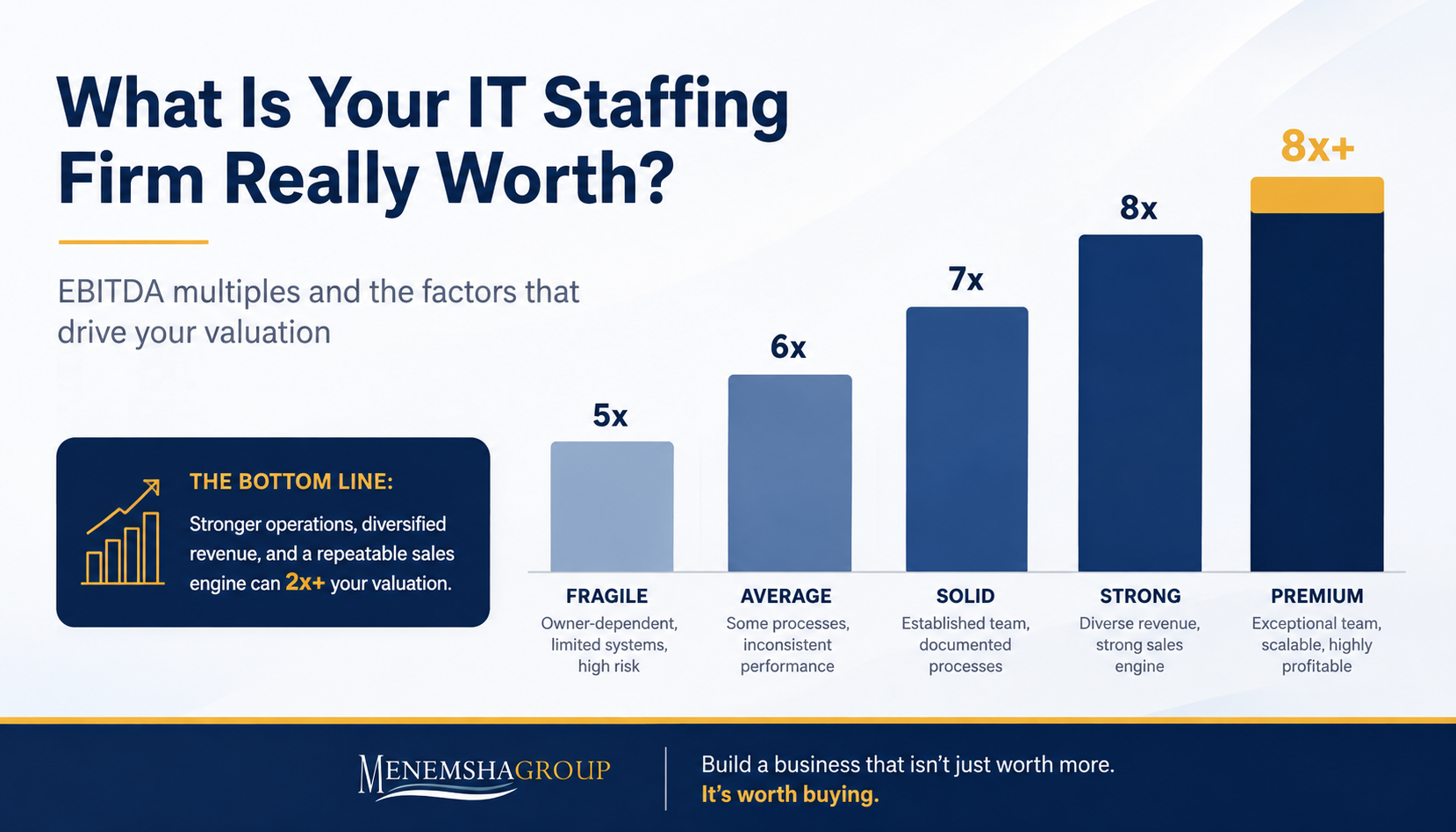
Menemsha Group is the creator of the Menemsha Sales Performance System™ (MSPS) — an operating system built exclusively for IT staffing firms. MSPS replaces the “Sales Superhero Model” — where revenue depends on one or two key performers — with a complete system that defines how a team sells, builds the skills to execute it, and creates the management infrastructure to make performance predictable and scalable. Founded by Dan Fisher in 2008, Menemsha Group has worked with over 500 IT staffing firms and trained thousands of sellers and recruiters with industry-specific content, methodology, and coaching.
Dan Fisher: Aug 19, 2026, 8:45:46 AM
Why Your Sales Problem Is Actually a Valuation Problem: How Go-to-Market Strategy Drives EBITDA
Dan Fisher: Aug 6, 2026, 9:19:49 AM
ere's a question worth sitting with: if you sold your IT staffing firm and walked away, would your top clients stay — or would they follow you out...